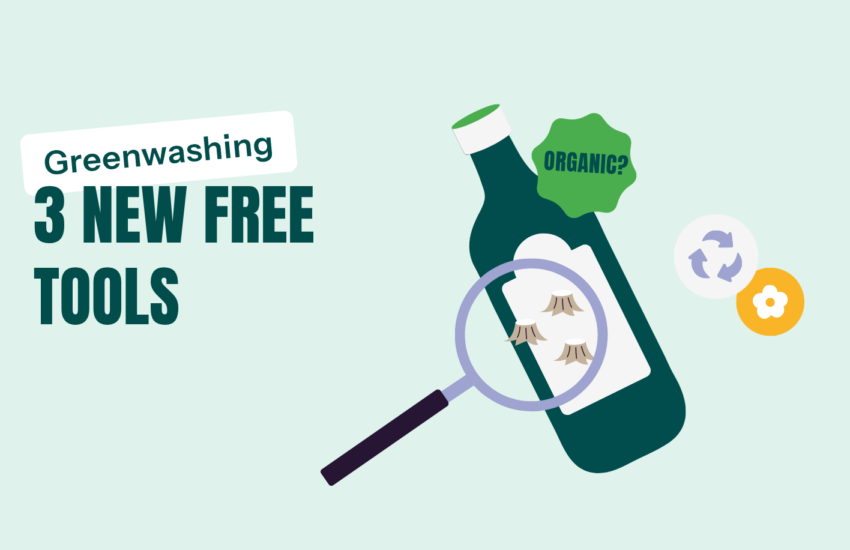
With Black Friday and the holidays approaching, these free tools aim to facilitate the detection and reporting of misleading environmental claims.
Montreal, November 9, 2026 – A product presented as “ecological,” packaging described as more “green,” a car advertisement that loosely evokes nature: how can we distinguish genuine environmental efforts from misleading promises? Ahead of the year’s busiest season for consumers, the Quebec Environmental Law Centre (CQDE) is launching free tools to help the public recognize greenwashing and report potentially misleading allegations.
According to a survey published by Deloitte in 2023, 49% of consumers in Canada doubted the truthfulness of companies’ environmental claims. This worrying observation highlights a major issue: with more and more ecological allegations found on products and in advertisements, it remains difficult to determine which ones are based on reliable information.
“Consumers should not have to investigate whether an environmental promise is true. Despite the existence of specific regulation on greenwashing, numerous cases of false claims continue to be identified, jeopardizing public trust,” underlines Genevieve Paul, executive director of the CQDE.
These practical guides follow the CQDE’s research report “Green” consumption: towards genuine environmental transparency, published last spring, which highlighted the difficulties faced by the population in accessing complete and reliable environmental information.
By misleading the public, greenwashing undermines consumers’ ability to make informed choices, hinders the ecological transition, and puts companies genuinely investing in reducing their environmental impact at a disadvantage. It also contributes to eroding trust in the information shared on environmental issues.
“It’s not necessary to be an expert to take action. With these tools, we want to give the public simple reference points for critically examining environmental claims,” explains Charles Codere, lawyer at the CQDE and author of the guide.
“When an environmental claim seems dubious, it is important to report it to the competent authorities so that the situation can be examined and to determine if an intervention is justified.”
In Quebec and Canada, legislative and regulatory measures have recently been taken to further limit misleading claims, making it possible to reverse the trend.
Free tools to learn and take action
To help the public better understand greenwashing and to intervene when an allegation raises doubts, the CQDE provides three complementary tools
- The leaflet “Greenwashing: detect it to take better action”, to understand the phenomenon, recognize the main forms it can take and develop reflexes to evaluate environmental claims.
- The leaflet “Greenwashing: how to file a complaint?”, to find out which steps to take to report a doubtful allegation.
- A checklist, “Red flags to watch out for”, to quickly identify claims that warrant closer examination.
Over the coming months, the CQDE will continue its advocacy work on this issue. It plans to engage with the public to raise awareness of these tools, answer questions, and discuss concrete ways to contribute to the fight against greenwashing.